
MOT & EXHAUST GUIDE · WEST COAST PERFORMANCE
Common MOT Exhaust Failure Causes and What to Do
Common exhaust-related MOT issues include a major leak or an insecure system, excessive noise, and missing or defective required emissions-control equipment, alongside emissions results outside the applicable limit. The exact result always depends on your specific vehicle and the tester’s assessment on the day, so this guide explains the broad picture rather than predicting any one outcome.
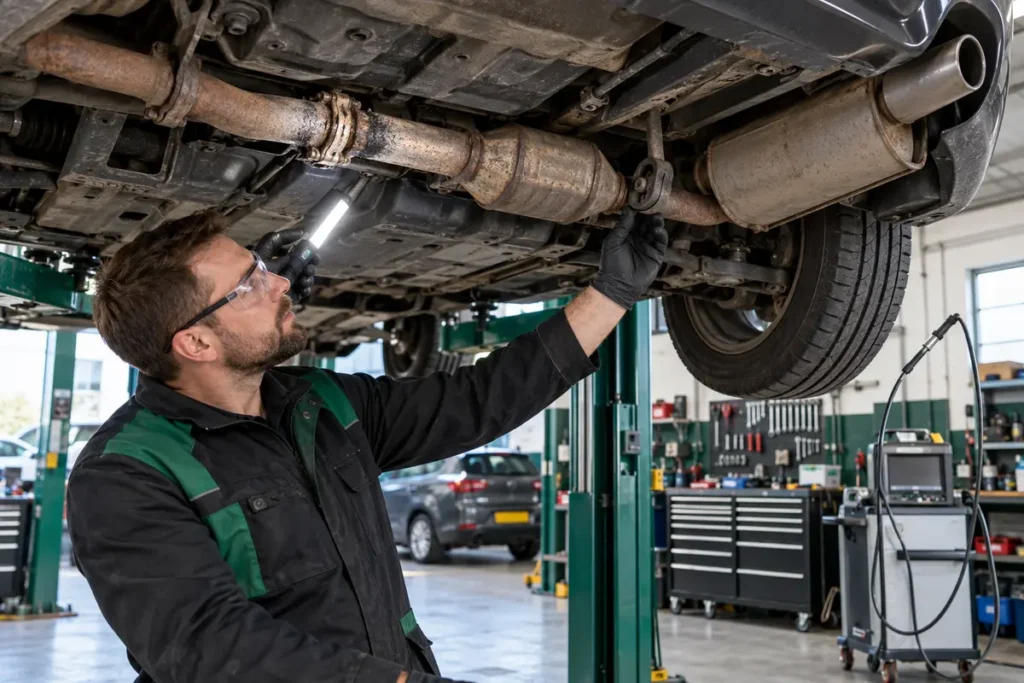
An MOT Result Is Vehicle-Specific
Applicable criteria vary with a vehicle’s age, fuel type, class and original equipment. Rather than assuming the cause from a general list like this one, it is always worth reading the exact defect wording on your MOT record, since that is what actually applies to your car.
This guide explains the broad categories in plain language, but it is not a substitute for the specific result recorded against your vehicle.
Common Exhaust-System Reasons for Concern
These are common areas of the exhaust system that can be relevant to an MOT result. They are broad categories, not a claim that every small defect automatically causes a failure.
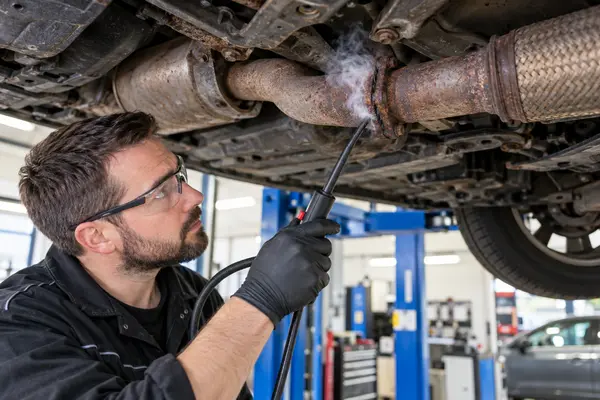
A Major Leak or Escaping Exhaust Gas
A major leak, or exhaust gas escaping before it should, is a common area of concern, though not every small imperfection is treated the same way.
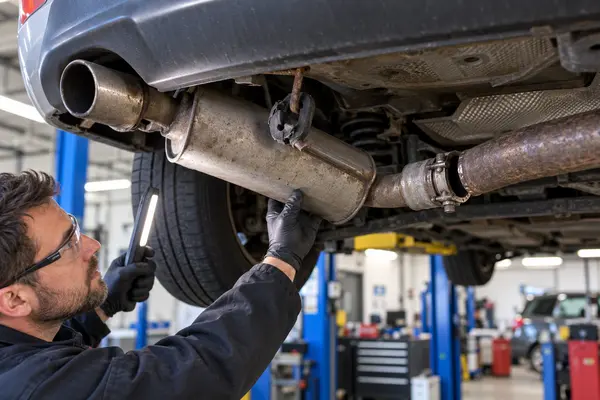
An Insecure, Damaged or Incomplete System
Security of the exhaust system is assessed as a whole. A missing or defective mounting does not automatically mean the system is insecure.
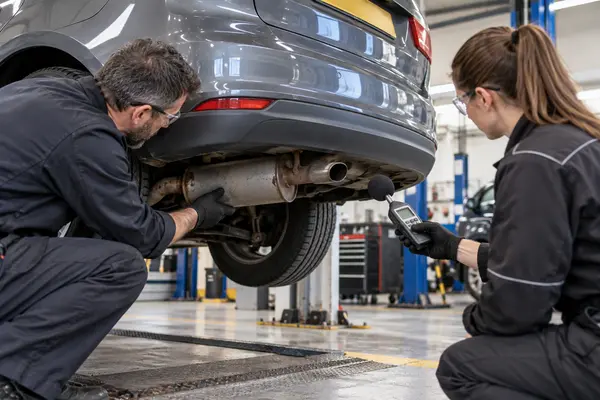
Excessive Noise or an Ineffective Silencer
Noise levels beyond what is permitted, or a noise-suppression system that is insecure or could come loose, are both areas that are assessed.
The exact wording on your MOT record, not a general description, determines what applies to your specific vehicle. Two vehicles with a similar noise or a similar-looking section of pipework can still receive different results, depending on their specific condition and the applicable criteria.
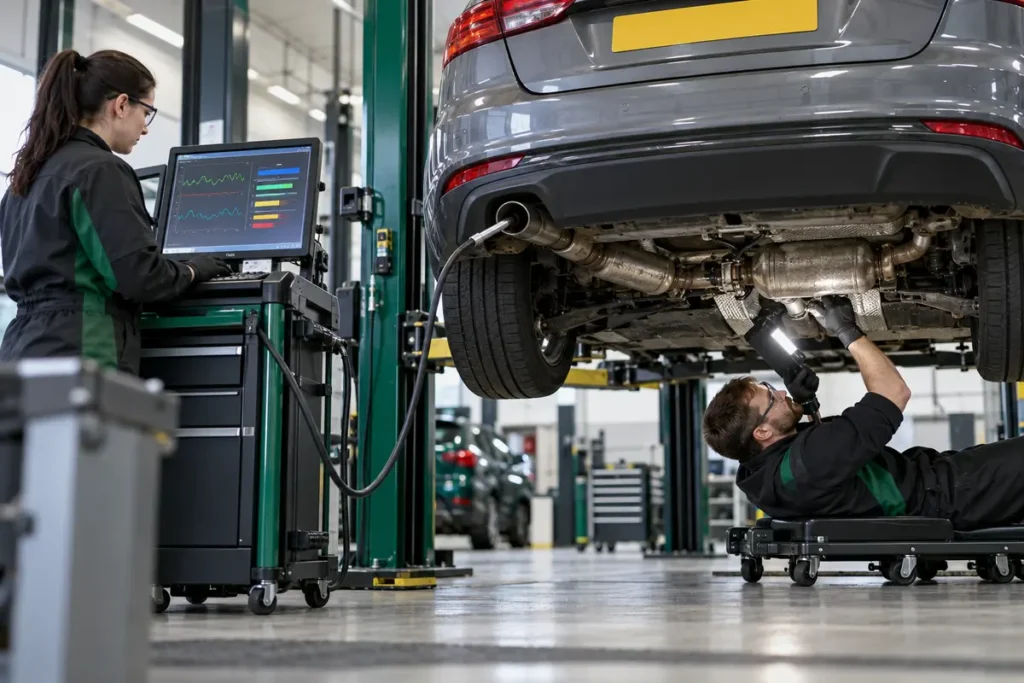
BEYOND A VISUAL CHECK
Emissions and Emission-Control Equipment
Emissions testing and equipment checks depend on criteria specific to your vehicle, including its age and fuel type. At a high level, this can involve a measured emissions result outside the applicable limit, required equipment such as a catalytic converter or diesel particulate filter appearing missing, obviously modified or obviously defective, and relevant warning indicators for vehicles where that check applies.
We do not describe removal or bypass methods here, and a result in this area does not automatically mean a single component is to blame — broader investigation is often needed. For the current official detail, see the GOV.UK MOT inspection manual.
Because emissions and equipment criteria vary by vehicle, fuel type and first-use date, we look at what actually applies to your car rather than assuming the same rule covers every vehicle we see.
What May Cause These Problems?
These are broad possibilities rather than a diagnosis. Working out the actual cause for your vehicle requires proper investigation, and replacing the exhaust alone does not automatically correct an emissions-related result.
Age, Corrosion and Heat Cycles
Exhausts naturally age, and repeated heating and cooling combined with corrosion can affect condition and security over time.
Impact Damage or Previous Repairs
A pothole, kerb strike or a previous repair that has not held up can affect the exhaust’s condition and security.
Engine, Fuel or Sensor Faults
Faults elsewhere in the engine, fuel or sensor systems can affect emissions results, independently of the exhaust’s physical condition.
More than one of these can apply at once, which is another reason a result is best understood through inspection rather than guesswork from a written description.
BEFORE YOUR APPOINTMENT
Warning Signs Before the MOT
Some possible signs are worth noting ahead of your MOT, though their absence does not guarantee a pass. Our guide on identifying an exhaust leak covers this in more detail if you would like to read further.
- A new or louder exhaust note
- Ticking or hissing sounds
- Rattling
- A visibly low or hanging section, observed safely
- Fumes noticed in or around the vehicle
- A dashboard warning light
- Smoke or a change in engine behaviour
NEXT STEPS
What to Do After an Exhaust-Related MOT Result
This sequence explains a sensible way to respond, without promising a pass, a free retest or a fixed turnaround.
01
Read the Exact Defect and Category
Check the precise wording and category recorded on your MOT record.
02
Note Symptoms and Recent Work
Record any symptoms, warning lights and recent exhaust or engine work.
03
Avoid Unsafe Driving
Avoid driving where fumes, dragging parts or serious damage are present.
04
Arrange an Inspection
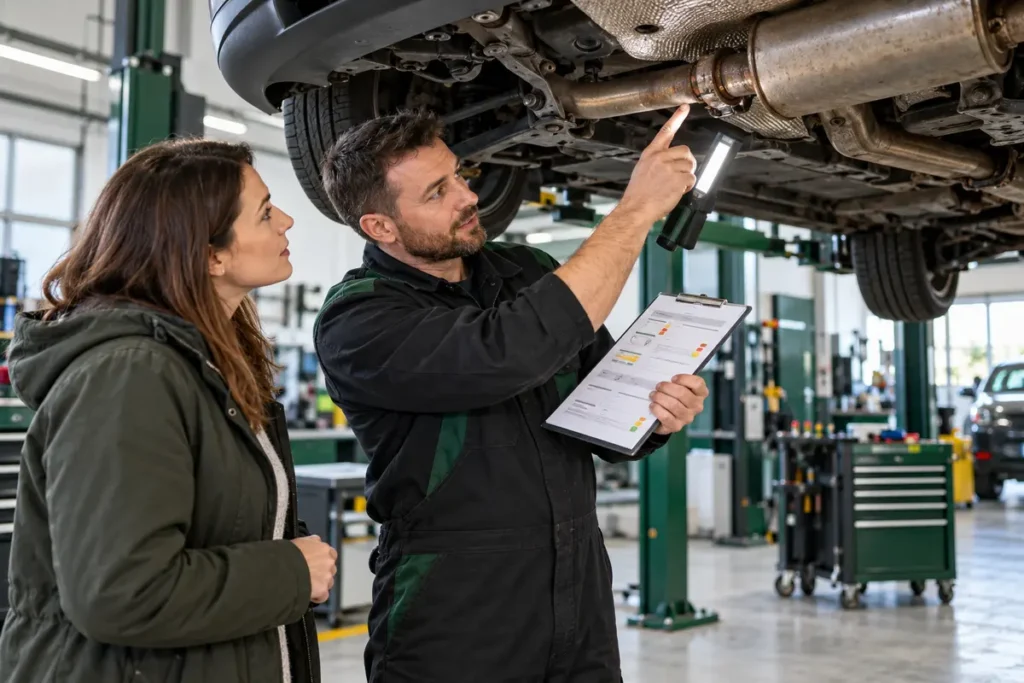
Arrange a vehicle-specific inspection or diagnostic assessment with us.
05
Review the Cause and Options
We review the confirmed cause and repair options with you before anything is agreed.
06
Follow the Retest Process
Follow the official retest process and timing given by your MOT provider.
Three Different Outcomes Need Different Responses
Not every exhaust-related result needs the same response. What is appropriate depends on which area is actually affected on your vehicle, and sometimes more than one of these categories applies at the same time.
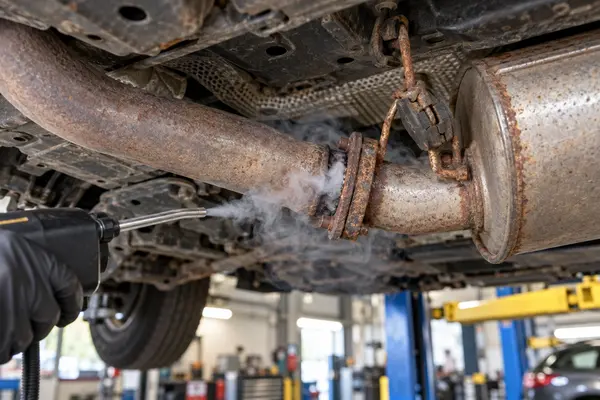
Leak or Security Defect
This may involve repairing or replacing an affected section, confirmed after inspection of the specific vehicle.
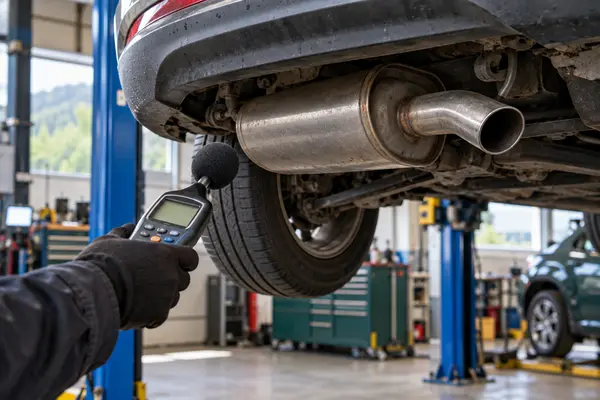
Noise-Related Concern
This may involve the silencer or suppression system, and is assessed alongside the rest of the exhaust’s condition.
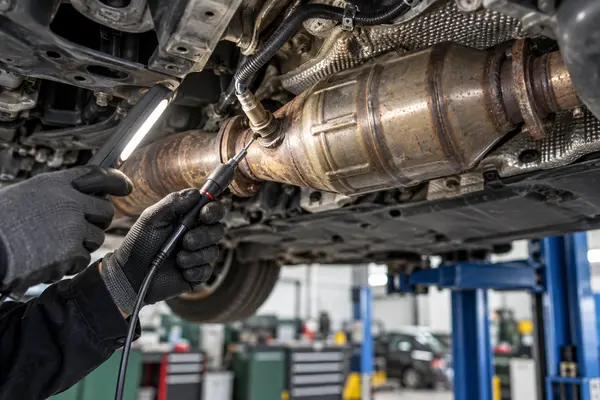
Emissions or Control-Equipment Issue
This may require broader diagnosis rather than simply fitting a replacement rear silencer, since the cause can sit elsewhere.
We confirm which of these applies to your vehicle, and what a proportionate response looks like, only after inspection.
BEFORE YOUR APPOINTMENT
Why Pre-MOT Exhaust Attention Can Help
Responding to a known noise, fume, damage or warning light before your MOT appointment means any relevant issue can be looked at and, where appropriate, addressed in good time, rather than being discovered on the day.
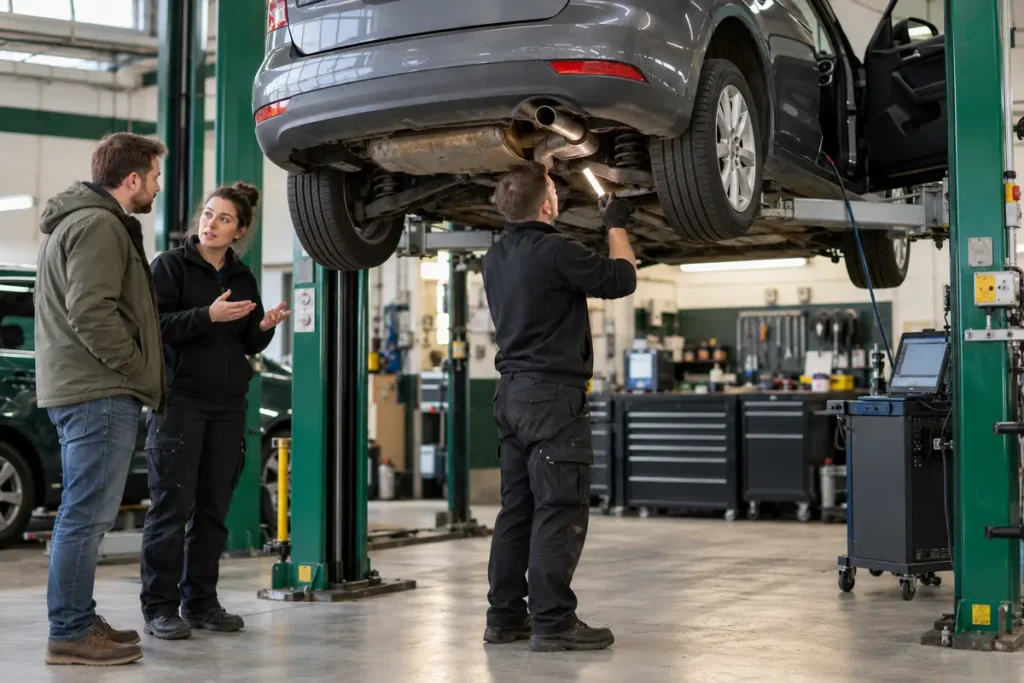
We do not offer a formal pre-MOT check or claim this guarantees a pass. If you would like an exhaust inspected or repaired ahead of an appointment, our exhaust repair services page has more detail, or you can get in touch directly.
BEFORE YOU GET IN TOUCH
Information to Bring to the Workshop
Sharing these details helps us understand your situation more quickly, though none of this is required before you contact us. Please do not attempt any unsafe self-inspection to gather this information.
- Vehicle make, model, year and fuel type
- The exact MOT defect text
- The emissions printout, if you were given one
- Any warning lights shown
- Symptoms and when they occur
- Any recent impact
- Prior exhaust or engine work
- Any modifications
- Whether the vehicle is parked, driveable, or has a hanging component
LOCAL TO DALRY
Discuss an Exhaust-Related MOT Result at Our Dalry Workshop
West Coast Performance is based at Carsehead Foundry, Beith Road, Dalry, KA24 4HZ, and provides exhaust inspection and repair support for drivers across Ayrshire. We are not an MOT testing station, but we can help you understand and address an exhaust-related result.
Whether you are preparing for an upcoming MOT or have already received a result you would like to discuss, we are happy to talk through your vehicle before arranging an inspection.
- Carsehead Foundry, Beith Road, Dalry, KA24 4HZ
- Exhaust inspection and repair support across Ayrshire
- Cause confirmed by inspection before work is agreed
Common MOT Exhaust Failure FAQs
What exhaust problems can cause an MOT failure?
Common areas include a major leak or an insecure system, exhaust fumes entering the cabin, excessive noise or an insecure noise-suppression system, and required emissions-control equipment that is missing, obviously modified or obviously defective. Applicable criteria depend on your specific vehicle.
Will any exhaust leak fail an MOT?
Not necessarily every leak is treated the same way. Current guidance treats a major leak or an insecure system as a significant issue, but the exact assessment depends on the vehicle and what is found during the test.
Can an insecure or hanging exhaust fail?
Yes, the overall security of the exhaust system is assessed. However, one or more missing or defective mountings does not automatically mean the system is treated as insecure.
Can an exhaust be too loud for an MOT?
Yes. Exhaust noise beyond the permitted level, or a noise-suppression system that is insecure or could come loose, are both areas that are assessed as part of the test.
Does surface rust automatically cause a failure?
No. Corrosion becomes relevant when it produces a significant leak, insecurity or another assessable defect, rather than surface rust alone automatically causing an issue.
Can emissions fail even when the exhaust looks intact?
Yes. Emissions testing and equipment checks are separate from the exhaust’s visual condition, so a system can look intact while still returning an emissions-related result.
Can a warning light affect the MOT result?
For applicable vehicles, the engine malfunction indicator lamp is checked to confirm it illuminates at ignition and then goes out correctly. If it does not, this can be relevant to the result, depending on the vehicle.
What happens if required emissions equipment is missing?
For applicable vehicles, if emissions-control equipment fitted by the manufacturer is missing, obviously modified or obviously defective, this is treated as a significant issue under current guidance.
Does a failed MOT tell me exactly which part needs replacing?
No. The result records the defect category and wording, but confirming the exact cause and the part involved requires a proper inspection at a workshop.
Is it safe to drive after an exhaust-related MOT failure?
It depends on the specific defect. If fumes are entering the cabin, a component is dragging, or the vehicle otherwise seems unsafe, avoid driving it and seek professional or recovery advice.
Will repairing the exhaust guarantee an MOT pass?
No. Other criteria are assessed independently at the time of the test, so we cannot guarantee a pass or a particular retest outcome from any repair.
What should I bring when arranging an inspection?
Your vehicle’s make, model, year and fuel type, the exact MOT defect text, an emissions printout if you have one, and details of any symptoms, warning lights or recent work.
EXHAUST INSPECTION · DALRY
Need Help Understanding an Exhaust-Related MOT Result?
Share your vehicle details, the exact MOT wording, any emissions printout, symptoms, warning lights and recent work, and we will discuss it with you. View All Vehicle Services and Guides.
Or Contact Us Directly
FIND US
Carsehead Foundry, Beith Road, Dalry, KA24 4HZ
Experienced Local Mechanics
Skilled technicians with years of hands-on experience.
Authorised Powerflow Exhaust Centre
Official Powerflow centre building premium systems.
Modern Workshop & Diagnostics
State-of-the-art equipment for accurate diagnostics.
Convenient Ayrshire Location
Easily accessible with parking on-site.