
EXHAUST GUIDE · WEST COAST PERFORMANCE
How to Identify an Exhaust Leak
A change in exhaust sound, unusual fumes, rattling, visible damage, or a change you notice after an impact can all suggest a possible exhaust leak. These are useful clues, but only an appropriate inspection can confirm the actual source and severity. Please read the safety guidance below before anything else.
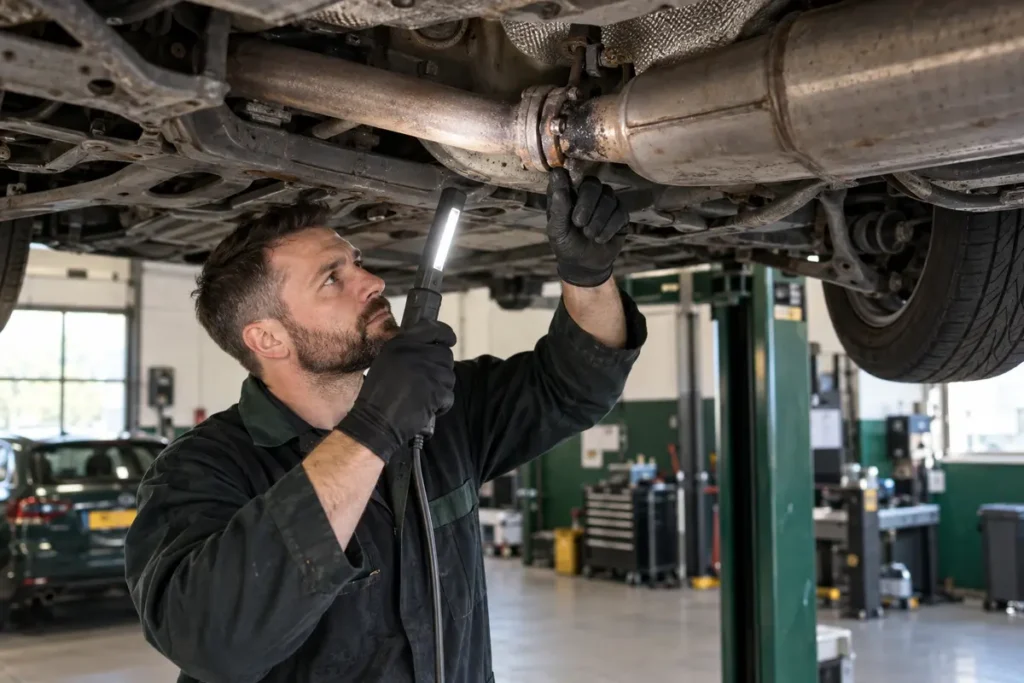
Fumes or Illness Need Prompt Action
If exhaust fumes appear to be entering the cabin, or anyone in the vehicle develops a headache, dizziness, nausea, weakness or confusion, move to fresh air, switch off the engine when it is safe to do so, and seek urgent medical advice or emergency help as appropriate. Carbon monoxide has no smell, so a lack of smell does not mean the air is safe.
- Fumes entering the cabin: move to fresh air and switch off when safe
- Headache, dizziness, nausea, weakness or confusion: seek urgent medical advice
- A hanging or dragging component: do not continue the journey
- Any doubt about safety: seek roadside recovery or professional advice
Common Signs That Deserve Attention
These are possible clues, not proof of a leak. Several different issues can produce similar signs, so they are a reason to arrange an inspection rather than a confirmed diagnosis.
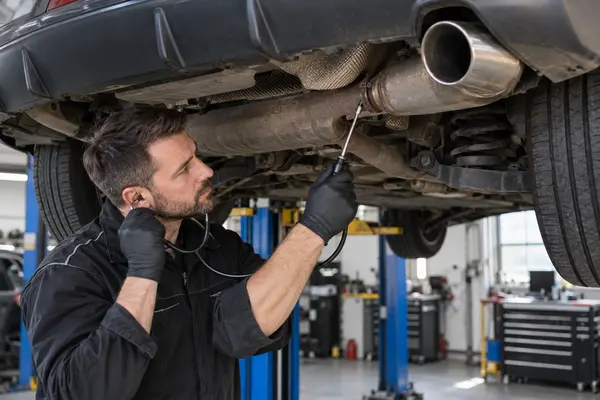
A New Ticking, Hissing or Louder Exhaust Note
A sound that is new, or has become noticeably louder, is a possible clue worth noting rather than proof of a leak.

Unusual Fumes or Smells Around the Vehicle or Cabin
An unusual smell around the vehicle, or any sense of fumes inside the cabin, is worth reporting and treating with caution.
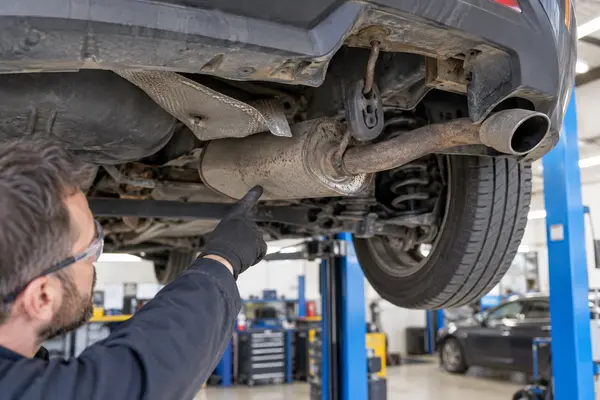
Rattling, Hanging Parts or Visible Damage From a Safe Position
Rattling, a part that looks low or loose, or visible damage seen from a safe position are all worth mentioning to us.
Noticing one of these does not tell you where a leak is, or how serious it may be. That is exactly what a professional inspection is for.
IN PLAIN LANGUAGE
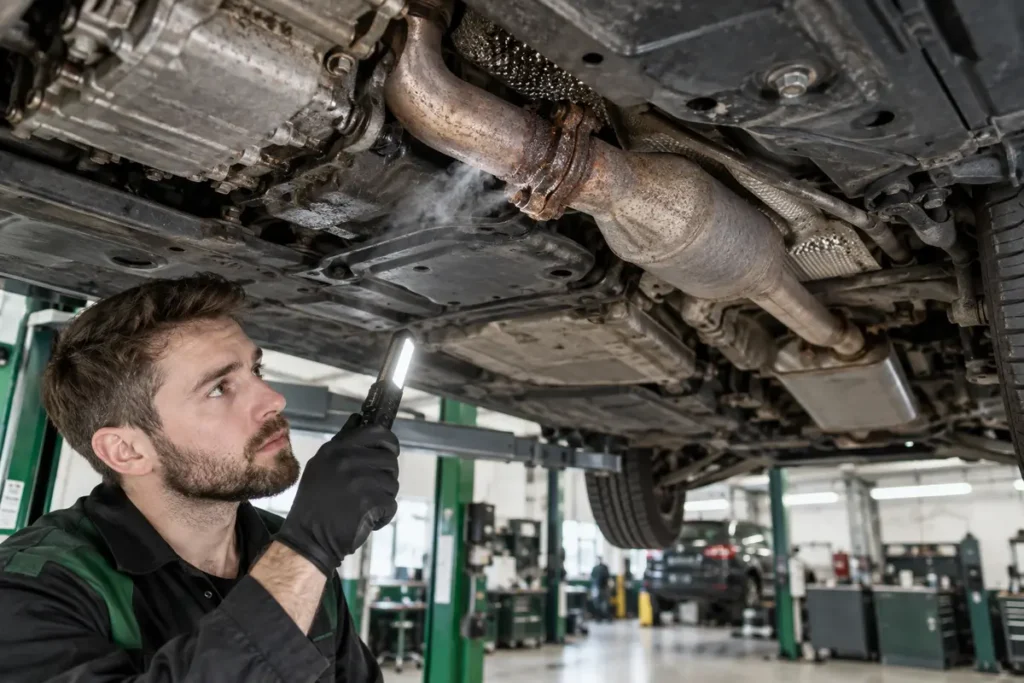
What an Exhaust Leak Actually Means
An exhaust system is designed to carry gases away from the engine, along the vehicle and away from the passenger area, usually through a series of pipes, joints and other components before reaching the outlet at the rear. An exhaust leak simply means there is an opening somewhere along that route — at a joint, a pipe, a silencer, or another part of the system — that allows gas or noise to escape before it reaches the intended outlet.
Exhaust layouts are not identical across every vehicle, and we cannot identify the likely location of a leak remotely. What matters is that gas or noise escaping earlier than intended is worth having looked at, whatever the specific vehicle.
A Warning Sign Is Not a Diagnosis
Symptoms like these are genuinely useful, but they cannot confirm a cause on their own. Unrelated faults can sometimes produce similar signs, which is exactly why an in-person assessment matters.
Sound Can Travel Along the System
A noise heard from inside the car does not reliably indicate where along the exhaust it originates.
Smell Alone Cannot Identify the Gas or Source
A smell can suggest something is worth checking, but it cannot confirm what gas is present or where it is coming from.
Visible Condition Does Not Show Every Hidden Problem
A component can look fine from a safe position while still having an issue that is not visible without proper inspection.
WHAT YOU CAN SAFELY NOTE
Safe Observations You Can Make
The following can be noted from inside the normal driving position, or while standing safely outside the vehicle. Please do not go underneath the vehicle, touch a hot exhaust, or attempt any improvised test — these observations alone are genuinely useful to us.
- When the sound occurs
- Whether it changes after start-up or during acceleration
- Where any smell is noticed
- Whether a dashboard warning has appeared
- Whether a recent impact or pothole occurred
- Whether a part appears visibly low or loose, without approaching it
WHAT TO DO NEXT
What to Do Next
If you suspect an exhaust leak, this sequence explains what to do, from an immediate safety response through to a confirmed inspection.
01
Move Somewhere Safe and Ventilated
If fumes or symptoms occur, move to a safe, well-ventilated place.
02
Switch Off and Get Into Fresh Air
Switch off the engine safely and get into fresh air when needed.
03
Do Not Attempt Improvised Tests
Do not crawl underneath the vehicle or attempt any improvised leak test.
04
Record What You Have Noticed
Note the sound, timing, warning lights and any recent impacts.
05
Contact a Workshop or Recovery
Get in touch with a workshop or recovery service based on apparent safety.
06
Allow an Inspection to Confirm
An inspection can confirm the source before any work is agreed.
When the Clue May Appear
When a sign appears can be a useful detail to mention, though timing alone does not prove which component is affected.

At Start-Up or While the Engine Is Cold
Some drivers notice a sound most clearly at start-up or while the engine is still cold.
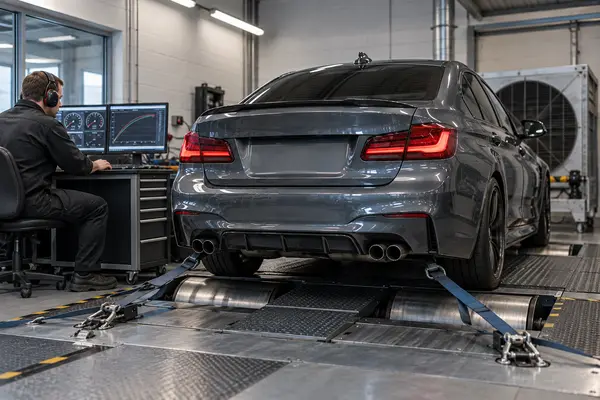
During Acceleration or Under Load
A sound or change may become more noticeable during acceleration or when the engine is under load.
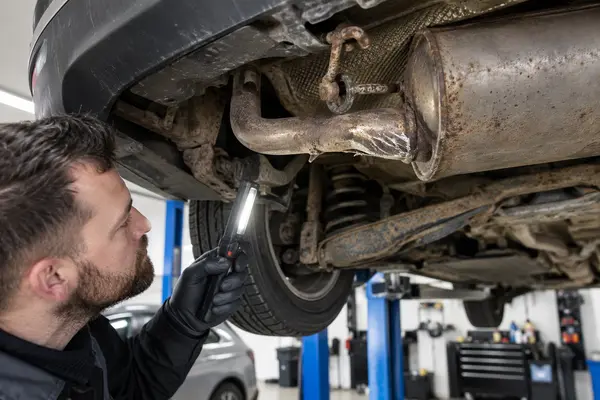
After an Impact, Corrosion or a Sudden Change
A sudden change following a pothole, kerb strike, or visible corrosion is worth reporting to us.
Whatever the timing, the same principle applies: these are details worth recording for the workshop, not evidence of a specific cause.
SAFE, IN-PERSON ASSESSMENT
Why a Professional Exhaust Inspection Matters
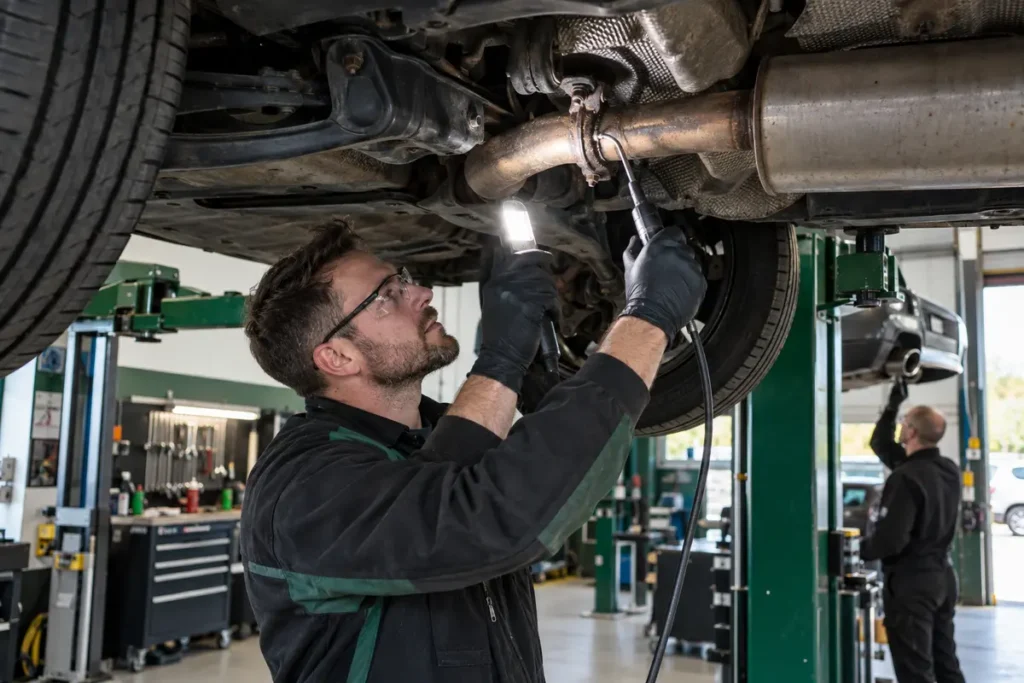
Confirming an exhaust leak safely means considering several things together: safe access to the vehicle, the condition of the system, the joints and mountings involved, and where gas or noise is actually escaping. This is not something that can be done reliably from the driving seat or from a description alone.
Depending on what an inspection finds, and what is agreed with you, the appropriate response may range from addressing a specific fault to replacing a section of the system. You can read more about our approach to assessment and repair on our exhaust repair services in North Ayrshire page.
BEFORE YOU GET IN TOUCH
Before Contacting the Workshop
Sharing these details helps us understand your situation more quickly, though none of this is required before you contact us. Please do not attempt any unsafe test to gather this information.
- Vehicle make, model and year
- When the issue began
- The sound and when it occurs
- Any smells or fumes and where they were noticed
- Any warning lights shown
- Any recent impacts or previous work
- Any visible changes you have observed safely
- Whether anyone felt unwell
- Whether the vehicle is currently parked or driveable
LOCAL TO DALRY
Arrange an Exhaust Inspection at Our Dalry Workshop
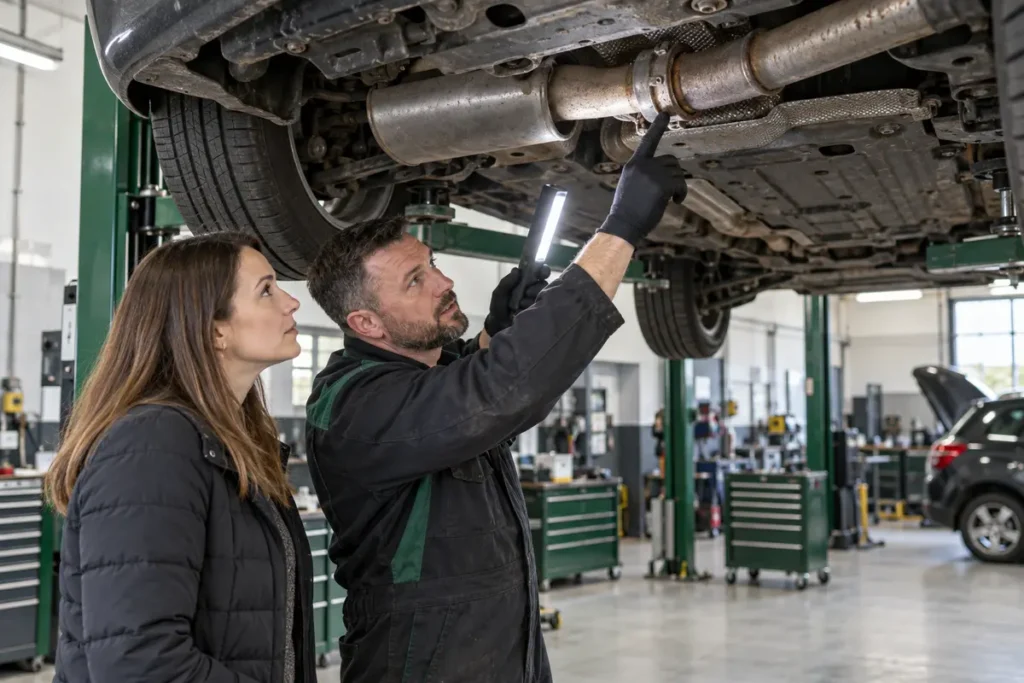
West Coast Performance is based at Carsehead Foundry, Beith Road, Dalry, KA24 4HZ, and serves drivers across Ayrshire. This guide is general information, and a professional inspection at our workshop is the way to confirm what is actually happening with your vehicle and agree a suitable repair.
- Carsehead Foundry, Beith Road, Dalry, KA24 4HZ
- Serving drivers across Ayrshire
- Source confirmed by inspection before work is agreed
Exhaust Leak FAQs
What are the common signs of an exhaust leak?
Possible signs include a new or louder exhaust sound, unusual fumes or smells, rattling, or a visible change such as a part that looks low or loose. These are clues to report, not a confirmed diagnosis.
Can I identify an exhaust leak by sound alone?
Not reliably. Sound can travel along the exhaust system, so a noise heard from inside the car does not confirm where along the system it is coming from. An inspection is needed to locate it.
Is it safe to drive with a suspected exhaust leak?
It depends on what you have noticed. Fumes entering the cabin, feeling unwell, or a hanging component mean you should stop and seek advice. For less severe signs, it is still best to arrange an inspection promptly.
What should I do if I smell fumes inside the car?
Move to fresh air, switch off the engine when it is safe to do so, and seek urgent medical advice if anyone feels unwell. Do not continue the journey if you are unsure it is safe.
Does carbon monoxide have a smell?
No. Carbon monoxide has no smell, so the absence of a smell does not mean the air is safe. This is why any suspected fume exposure should be taken seriously regardless of what you can smell.
Why might the exhaust sound louder when the car is cold?
Some drivers notice sounds more at start-up or while the engine is cold, but this does not confirm a specific cause. It is a detail worth mentioning when you get in touch.
Can an exhaust leak cause a ticking or hissing noise?
A ticking or hissing noise is a possible sign worth having checked, though it can have more than one possible cause, so it is not proof of a leak on its own.
Can I safely test for an exhaust leak at home?
We do not recommend attempting to test for a leak yourself. Please do not go underneath the vehicle, touch a hot exhaust, block the tailpipe, or use any improvised test. A professional inspection is the safe way to assess the system.
Can a pothole or impact damage an exhaust?
Yes, a pothole or impact can potentially affect the exhaust system, and a change noticed afterwards is worth reporting when you get in touch.
Will a leak always be visible?
No. A leak is not always visible from a safe position, and the exhaust’s condition can look fine while still having an issue that only becomes clear during a proper inspection.
Does every exhaust leak require a complete replacement?
Not necessarily. Depending on what an inspection finds, the appropriate response may range from addressing a specific fault to replacing a section, and this is agreed with you after assessment.
How do I arrange an inspection with West Coast Performance?
Use the “Arrange an Exhaust Inspection” button, call the workshop on 01294 493376, or complete the enquiry form below and we will get back to you.
EXHAUST INSPECTION · DALRY
Concerned About a Possible Exhaust Leak?
Describe your vehicle, the warning signs you have noticed, timing, any recent impacts, and whether fumes have entered the cabin, and we will discuss an inspection with you.
Or Contact Us Directly
FIND US
Carsehead Foundry, Beith Road, Dalry, KA24 4HZ
Experienced Local Mechanics
Skilled technicians with years of hands-on experience.
Authorised Powerflow Exhaust Centre
Official Powerflow centre building premium systems.
Modern Workshop & Diagnostics
State-of-the-art equipment for accurate diagnostics.
Convenient Ayrshire Location
Easily accessible with parking on-site.