
EXHAUST GUIDE · WEST COAST PERFORMANCE
Should You Repair or Replace Your Car Exhaust?
There is no universal answer. An isolated defect with sound surrounding material may be a candidate for a repair or a section replacement, while widespread deterioration or several weak areas may point towards broader work. Only an in-person inspection can establish the sensible scope for your particular vehicle and situation.
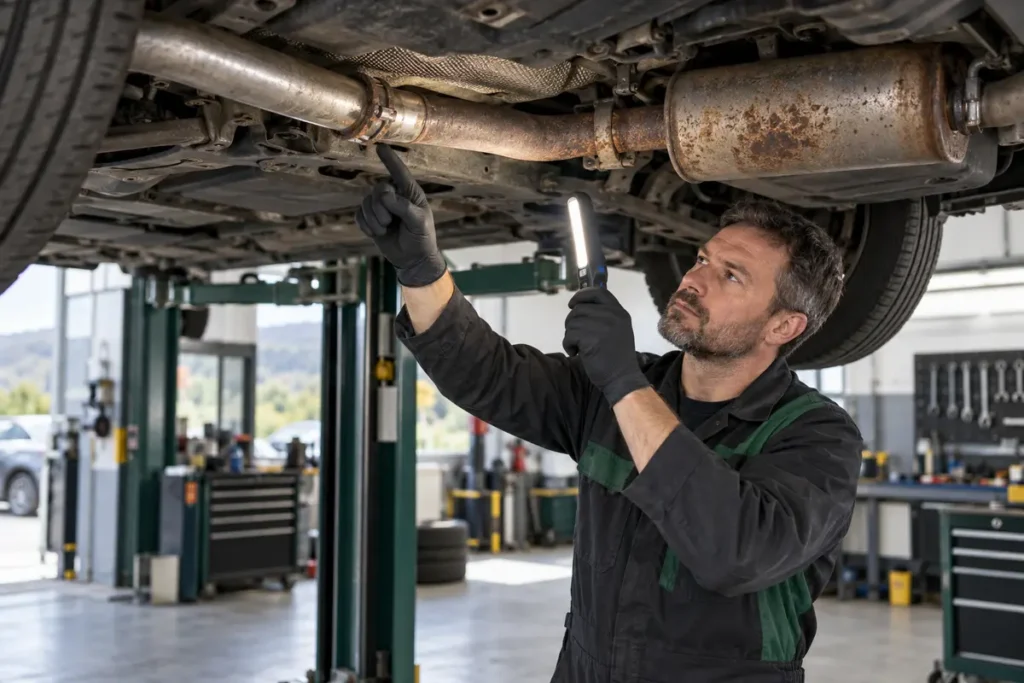
Repair the Fault, Not Just the Symptom
The visible hole or the point where a noise is loudest does not necessarily represent the condition of neighbouring joints, mountings or pipework. A sensible recommendation looks at the system as a whole rather than reacting to the single most obvious symptom. If you have noticed a specific warning sign, our guide on identifying an exhaust leak covers this in more detail.
When a Limited Repair May Be Considered
These are considerations that can support a repair, not a promise that repair will be possible for your vehicle. Whether any of these apply is confirmed only after inspection.
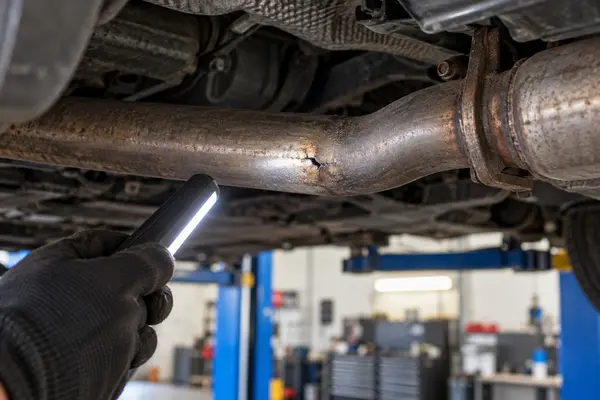
The Damage Is Genuinely Localised
Where a defect is confined to one small area rather than spread across the system, a limited repair may be worth considering.
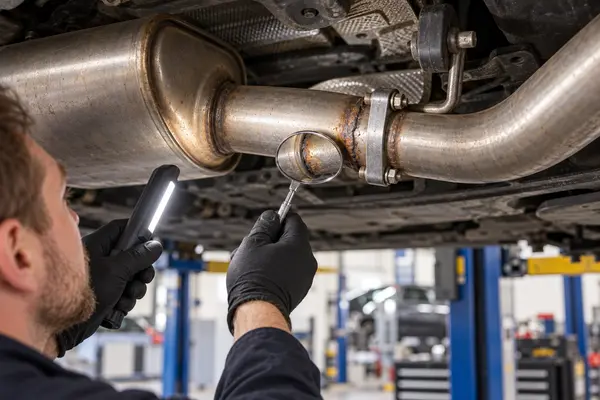
Surrounding Metal and Connections Remain Serviceable
A repair depends on the condition of the metal and joints around the defect, not only the defect itself.
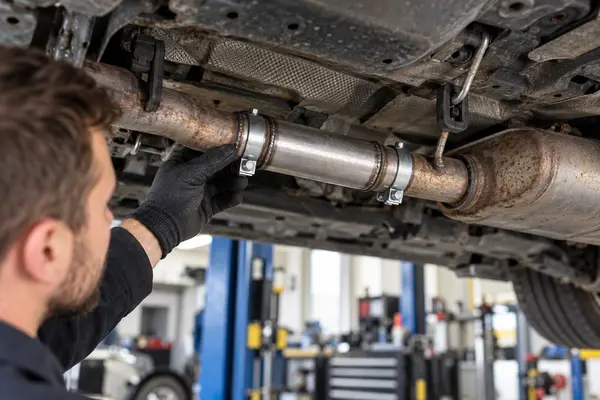
A Sound, Safe and Proportionate Repair Is Possible
Where inspection confirms a repair would be sound and safe, it may be a proportionate option rather than a wider replacement.
A repair that addresses only the visible symptom, without checking the surrounding area, is not the same as a considered, proportionate repair. The distinction matters because a quick fix that ignores nearby condition can mean the same issue, or a related one, reappears sooner than expected.
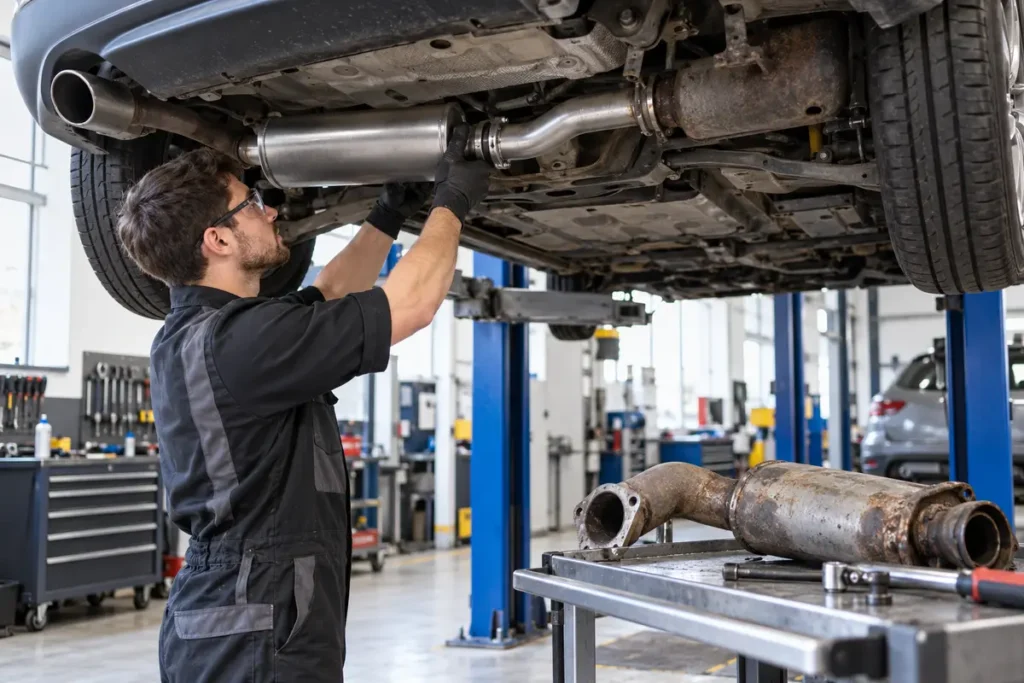
A DEFINED SCOPE
When Section Replacement May Make More Sense
A defective silencer, pipe section, flex section, joint or mounting area may sometimes be addressed as a defined section rather than a spot repair or a full system, depending on the vehicle’s design, the condition found, and what parts or fabrication options are practical.
This is not a fixed menu of interchangeable repairs, and not every part is individually replaceable on every vehicle. Where a suitable pattern part is not available, a custom stainless steel section may be one option to discuss, though this is not required or assumed for every case.
The goal of a defined section approach is to address what is actually defective, without disturbing parts of the system that remain in good condition and do not need attention.
When Wider Replacement May Be Discussed
Vehicle value, how long you intend to keep the car, and your own priorities can all inform this conversation, but they never override safety, roadworthiness or emissions requirements.
Corrosion or Damage Across Several Areas
Where more than one area shows significant corrosion or damage, a broader approach may be more practical than repeated spot repairs.
Weak Joints or Adjacent Sections
If neighbouring joints or sections cannot support a lasting repair, this can be a reason to discuss wider work.
Repeated Repairs That No Longer Help
Where previous repairs have not addressed the underlying condition, a wider conversation may be more useful than another patch.
None of these situations automatically means a full system is needed. They are simply reasons the conversation may extend beyond a single localised repair once we have inspected your vehicle.
A THOROUGH LOOK
What the Workshop Should Assess
A considered recommendation looks at more than the obvious defect. These are the areas we take into account before discussing scope with you, rather than focusing only on the part that first drew attention.
- Location of the defect
- Extent of corrosion or damage
- Leaks and overall security
- Hangers and mountings
- Joints and flanges
- Condition of adjacent sections
- Prior repairs or modifications
- Required emissions-control components
- Compatibility and access
- Likely repair durability
- Your agreed goals for the vehicle
OUR PROCESS
From Symptom to Agreed Scope
Every enquiry follows the same sequence, from your first description of the problem through to an agreed, explained scope of work.
01
Explain the Symptom
You explain the noise, smell, damage or MOT wording you have noticed.
02
Review the Vehicle
We review the vehicle and its existing exhaust configuration.
03
Locate the Defect
We locate the defect and assess the condition of the surrounding area.
04
Compare the Options
We compare local repair, section replacement and wider options for your vehicle.
05
Discuss Trade-Offs
We discuss the practical trade-offs with you before anything is authorised.
06
Agree the Scope
We agree the scope and any sensible future monitoring together.
Three Questions That Shape the Decision
These questions help frame a balanced recommendation. We do not treat full replacement as the automatic default, and we do not present the cheapest short-term option as automatically best.
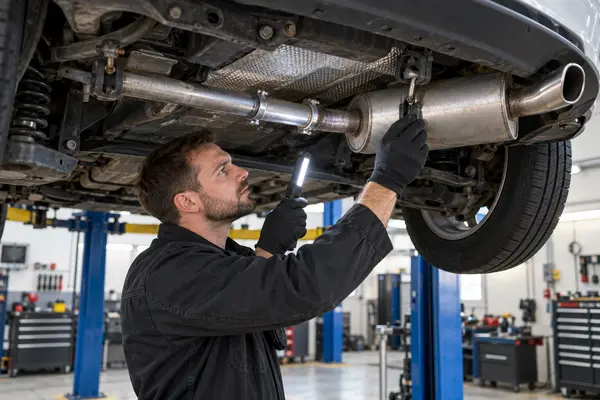
Will the Remaining System Provide a Sound Basis?
If parts of the system are left in place, they need to be capable of properly supporting the repaired or replaced section.
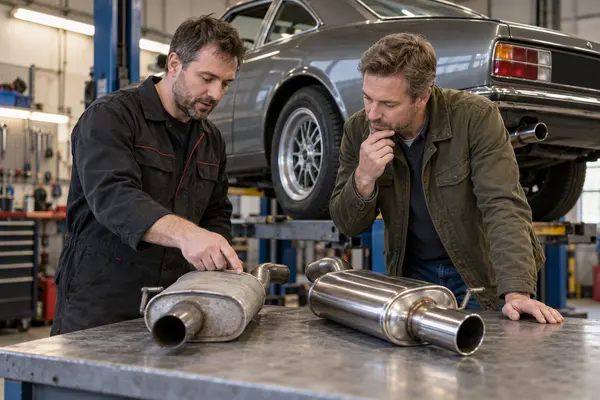
Is the Proposed Work Suitable for the Vehicle and Its Use?
The right option depends on how the vehicle is actually used, not just what is technically possible.
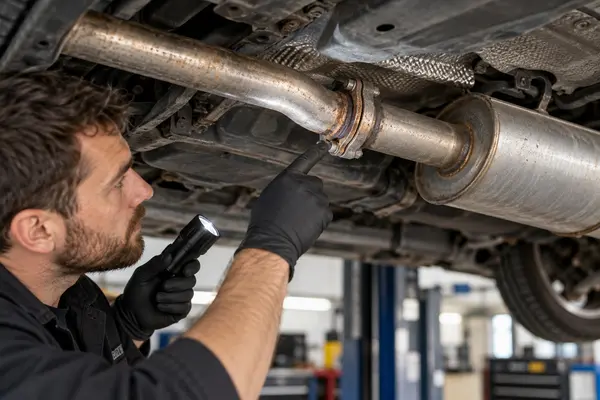
Does the Option Address the Cause Without Unnecessary Replacement?
A good recommendation deals with the actual cause, without replacing parts that are still sound.
Answering these honestly, for your specific vehicle, matters more than following a fixed rule that applies to every car in the same way.
BEYOND THE INITIAL PRICE
Repair Cost Versus Longer-Term Value
The lowest initial price is not automatically the best outcome if adjacent sections are weak and likely to need attention again soon after. Equally, replacing sound parts that did not need to be touched is not a sensible use of your money either.
Repeated labour and access, and how long you intend to keep the vehicle, are reasonable things to consider as part of this conversation. We do not quote figures or promise savings or a specific lifespan here — these are discussed for your vehicle once it has been inspected.
What we aim for is a recommendation that makes sense for your vehicle and your plans for it, rather than a one-size-fits-all answer that ignores either the initial cost or what may be needed again later.
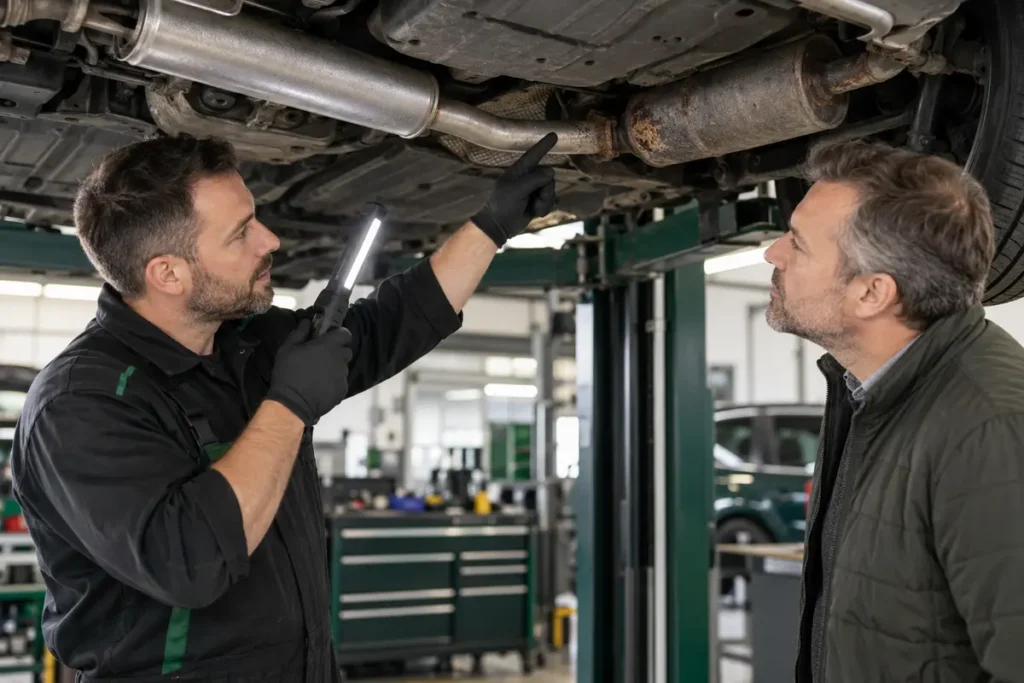
BEFORE YOU GET IN TOUCH
Information to Share Before an Inspection
Sharing these details helps us prepare before you arrive, though none of this is required before you contact us. Please do not attempt any unsafe self-checks to gather this information.
- Make, model, year and fuel type
- Current symptoms
- When they began
- Any recent impact
- Exact MOT or advisory wording, if applicable
- Previous exhaust repairs
- Known modifications
- Any warning lights
- How the vehicle is used
- Intended ownership and priorities
- Whether the vehicle is currently safe to move
LOCAL TO DALRY
Discuss Repair or Replacement at Our Dalry Workshop
West Coast Performance is based at Carsehead Foundry, Beith Road, Dalry, KA24 4HZ, and provides exhaust inspection and repair options for drivers across Ayrshire. The right scope for your vehicle is confirmed after inspection, not assumed in advance.
Whether you are weighing up a repair, a section replacement or a wider conversation, we are happy to talk it through with you before you decide anything.
- Carsehead Foundry, Beith Road, Dalry, KA24 4HZ
- Exhaust inspection and repair options across Ayrshire
- Scope agreed with you before any work is authorised
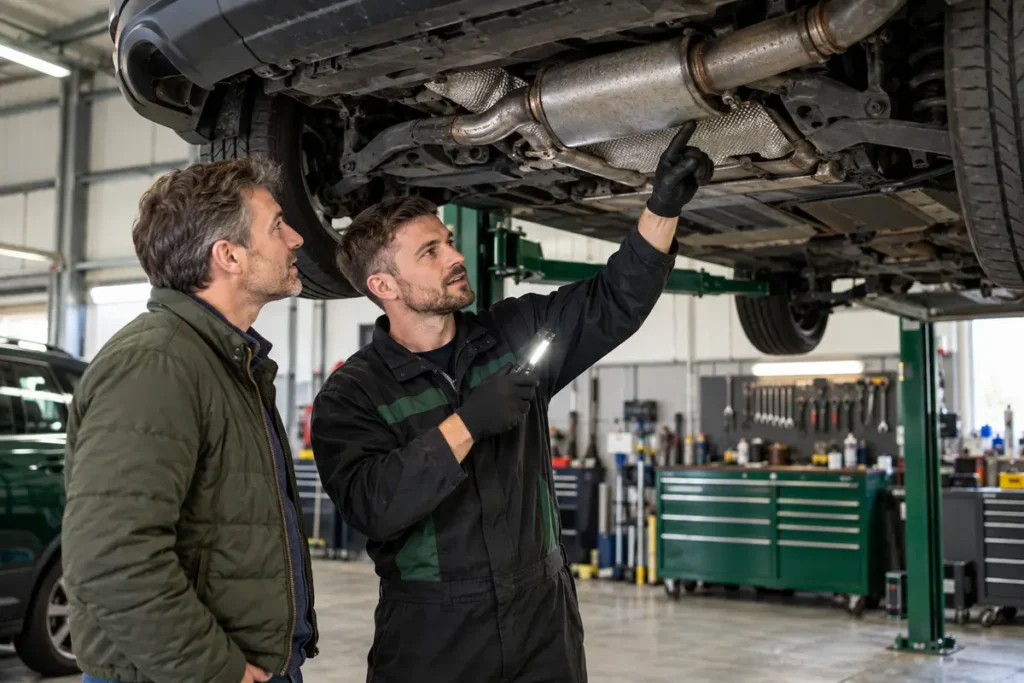
Repair or Replacement FAQs
Can a damaged exhaust pipe be repaired?
In some cases, yes. Where the damage is genuinely localised and the surrounding metal and joints remain serviceable, a repair could be considered, confirmed after inspection.
When is section replacement more sensible than a patch?
Section replacement may make more sense where a defined component, such as a silencer or a defined pipe section, is defective, rather than a single small point that a patch could address.
Does rust mean the whole exhaust needs replacing?
Not automatically. Rust becomes more relevant when it affects several areas, weakens joints, or means neighbouring sections can no longer support a lasting repair, rather than surface corrosion alone.
Can a silencer be replaced without replacing the entire system?
This can sometimes be possible, depending on the vehicle’s design and the condition of the rest of the system, and is confirmed after inspection rather than assumed.
Is welding always possible on a corroded exhaust?
No. Whether a sound and safe repair is achievable depends on the condition of the metal, and we do not assume welding is possible without inspecting the affected area first.
Is repairing an exhaust always cheaper than replacing it?
Not always. A repair is not automatically the cheaper option in the long run if surrounding areas are weak, and replacement is not automatically better if sound parts do not need to be touched.
How long will an exhaust repair last?
This depends on the vehicle, the extent of the work and ongoing conditions, so we do not give a fixed lifespan figure. We can discuss realistic expectations once we have inspected your vehicle.
Can an exhaust leak affect an MOT?
Yes, exhaust leaks and security are relevant to MOT criteria. Our guide on identifying an exhaust leak and our guide on common MOT exhaust failure causes cover this in more detail.
Do emissions problems always mean the exhaust needs replacing?
No. Emissions-related issues can involve other parts of the vehicle, not only the exhaust, so broader investigation is often needed rather than assuming a replacement exhaust will resolve it.
Can you repair a previously modified exhaust?
This depends on the modification and its condition. We assess what is actually there and discuss suitable options with you rather than assuming a standard approach applies.
Is it safe to drive with a damaged or hanging exhaust?
If a component is hanging or dragging, or you notice fumes entering the cabin or feel unwell, stop safely and seek professional or recovery advice rather than continuing to drive.
How do I arrange an exhaust inspection in Dalry?
Use the “Arrange an Exhaust Inspection” button, call the workshop on 01294 493376, or complete the enquiry form below and we will get back to you.
EXHAUST INSPECTION · DALRY
Get the Exhaust Assessed Before Choosing the Scope
Share your vehicle details, symptoms, MOT wording, previous repairs and priorities, and we will discuss a suitable inspection with you. Explore All Vehicle Services and Guides.
Or Contact Us Directly
FIND US
Carsehead Foundry, Beith Road, Dalry, KA24 4HZ
Experienced Local Mechanics
Skilled technicians with years of hands-on experience.
Authorised Powerflow Exhaust Centre
Official Powerflow centre building premium systems.
Modern Workshop & Diagnostics
State-of-the-art equipment for accurate diagnostics.
Convenient Ayrshire Location
Easily accessible with parking on-site.